“Won’t bleaching longer whiten the teeth on the older patient? – How long does it take to obtain the results on these very difficult cases?” asks Patrick
Hi Patrick,
Thanks for your question.
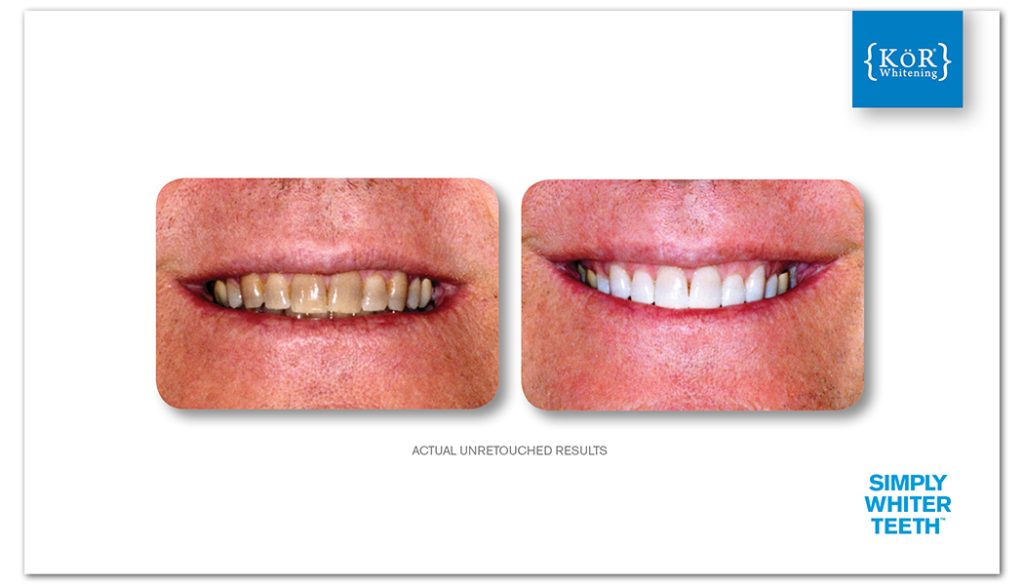
This question is relative to the section of the webinar where I show the slides below. Teeth are formed with varying degrees of organic matter trapped within the tooth structure. Some have more than others. Some have a darker organic matter that is trapped. Organic matter ALWAYS gets darker and darker with time, which has to do with those molecules attaching with each other, forming longer and longer molecules. As the molecules connect and get larger, more and more of the intramolecular bonds between atoms become chromophore bonds, which absorb visible light.
As extrinsic stain migrates into the tooth to become an intrinsic stain, those molecules work their way deeper and deeper and deeper into the various areas between crystals, such as interprismatic spaces and intraprismatic spaces, and even packing within the more microscopic intercrystalline space.


So what you end up with is a deeply packed, tightly woven, solid mass of organic matter/stain filling all the microscopic space within the tooth structure. It’s so plugged that bleaching factors can’t get into the tooth structure very well to break apart the molecules and convert the chromophore bonds.
What is required is a considerable TIME of constant saturation with fresh, effective, active peroxide to start, via the oxygenation phase of whitening, breaking up the packed, woven mass of organic matter into smaller molecules that can be pushed out of the tooth through diffusion, thereby cleaning more and more, hour after hour.
So it’s not just whitening longer. The effectiveness of the whitening must be stellar – the process must be continuous for longer periods of time. The gels must stay active within the trays, including in the cervical third of the trays, instead of becoming inactive after only 20-35 minutes, as numerous studies show happens in typical whitening trays.
So it’s a combination of continuous contact time, specific chemistry of the gels, and design of the whitening trays to prevent salivary and sulcular fluid peroxidase antioxidant enzyme from entering the trays and destroying the gels.
As far as how long it takes to whiten the dark teeth of geriatric patients… it all depends on several factors. But that’s a very detailed discussion, so I’ll just say that typically, we’re looking at 3 weeks of nightly whitening with the proper trays and slow-release peroxide gel with 6+ hours of whitening activity each night and, in some cases, 4 weeks. Occasionally only 2 weeks is required. And then most commonly immediately followed by the 34% in-office Hydremide Peroxide whitening visit.
Hope this helps Patrick.
Very best regards,

Dr. Rod Kurthy
Related Posts